In 2020, I took a DNA test to find out about my ancestry. My DNA ancestry results are 85.8% European (mainly 73.3% Italian , 8.4% Spanish & Portuguese), 12.3% Indigenous American, and 1.1% North African. My maternal haplogroup is T2a1, and my paternal haplogroup is E-V13.
This ancestry composition aligns with the family history compiled by my mom. On my paternal side, four of my great-great-grandparents and one great-grandparent were born in the North of Italy (in the Genoa area) and immigrated to Argentina. On my maternal side, three of my great-great-grandparents were born in the South of Italy—two in the Calabria region and one in the Bari region—and also immigrated to Argentina.
On my maternal side, the last name from her father’s family is Spanish (Ocampo), which could explain the Spanish ancestry component. However, there is no information about who immigrated from Spain or when it occurred.
One great-grandparent on my paternal side also had a Spanish last name (Gonzalez) but unknown ancestry, which could help explain part of the Indigenous American ancestry.
Paternal Side
On my dad’s paternal side, my great-grandpa Lorenzo Carcagno was born in the Genoa area (exact location unknown) in 1838, he then immigrated to Argentina and died in Mercedes on March 23, 1922 at 84 years old. He married my great-grandma Manuela Gonzales in 1862. She was born in Uruguay in 1840, unknown parents and raised by a wealthy family in Mercedes. She died April 14 1924 (also 84 years old). They had 15 children, one of them my paternal grandpa Horacio Carcagno born March 25 1884. He had a heart attack earlier when he was 67, and according to the treatment at the time he was not supposed to do any work and rest. He was diabetic and died at 81 years old on June 8, 1965, from a fatal heart attack a few days after one of his legs was amputated. I was six years old. I don’t remember much about my grandpa. I have some vague memories of his wake, which took place at my paternal grandparents’ house we recently moved into. I remember my grandma greeting visitors while sitting on a chair and crying. I remember the room with an open casket in the middle. I also remember staying in a hotel with my grandma Lucia.
On my dad’s maternal side, my great-great-grandparents Domingo Calcagno and Benita Calcagno were born in Chiavari (Genoa area), immigrated to Argentina, and had my great-grandpa Pedro Calcagno in Mercedes on May 24, 1864. He died in 1935 at 71 years old. He was a carpenter.
Also on my dad’s maternal side, my great-great grandparents Emilio DeFilippi and Maria Vacarezza, also from Genoa, immigrated to Argentina and had my great-grandma Aurora DeFilippi in Mercedes on March 20, 1860. She died of February 24, 1927 at 67. She had skin allergies.
Pedro Calcagno and Aurora Defilippi married and had six children, one of them my paternal grandma Emilia Maxima Calcagno born on January 25, 1896. She died September 1st, 1985, at 89 years old with advanced cerebral atherosclerosis (Alzheimer’s disease?) when I was 26 years old. I do remember my paternal grandma quite well, she was a large presence in my life growing up and most of my childhood she lived with us. She was very energetic and worked very hard to take care of me and my siblings while my mom worked. She was very attentive but also quite controlling and pushy. I think this was difficult for mom, who wanted to maintain her own influence and independence in our upbringing. There were probably many power struggles between my grandma and my mom behind the scenes. My grandma was not very affectionate and quite uptight, and she would order us around a lot. But she was always attentive to our needs and quick to respond. Once my siblings and I were older, we started to challenge her authority more and this would drive her crazy. She was generous at giving us money to buy little things. I remember with sadness her mental health decline. She would go out and get lost trying to find her way back home, started forgetting how to cook, started asking the same questions repeatedly, hallucinated seeing flies and dead people, would get upset and leave the house. For the worst part I was away in College, so my siblings, especially my sister, experienced the worst of her condition daily. At some point, my parents, especially my mom, could not handle the situation anymore and decided to put her in a nursing home. My uncle was offended by this decision (even though him or his family never had to deal with my grandma’s illness before), and moved her into his house (get more from mom or Graciela)
My paternal grandparents Horacio Gegorio Carcagno and Emilia Maxima Calcagno married on April 21, 1928. He was 44 and she was 32 years old. Their last name is so close that often times I wonder if they were related. He owned a grocery store. They had two boys, the oldest was my paternal uncle Cesar Horacio Carcagno born in March 24, 1929, and the youngest was my dad Rubens Domingo Carcagno born on August 4, 1932.
My Dad
My dad, Rubens Doming Carcagno, was born on August 4, 1932, and died on October 25, 2021, at the age of 89 due to complications from pneumonia and advanced senile dementia, just like his mom and at the same age.
He was pulled out of high school at 15 years old to work and help with his family finances. At 18 he started working in the local IRS office as a junior assistant, and he then took an inspector exam and was appointed at a nearby town (Lujan). At 20 he served compulsory military service in Mercedes and met my mom. He eventually came back to the IRS office in my hometown when he was 26, where he married my mom and stayed until his retirement in 1993 at 61 years old. He was very hands-on, his hobby was radio transmissions he built his own equipment with vacuum tubes. He took care of home maintenance and repairs, and he enjoyed working on his car. He built a pit in the garage floor so he could access the underside.
For sports he played “pelota a paleta”, a traditional Argentine sport that is part of the broader family of Basque pelota games. It’s especially popular in Argentina, the Basque Country (Spain and France), and parts of Latin America. It is a fast-paced court sport where players use a wooden paddle (“paleta”) to hit a ball (“pelota”) against a wall (“frontón”). He enjoyed going to the club where the sport was played and having dinner with friends there.
He enjoyed cooking delicious barbecue (“asados”) for family gatherings and enjoyed eating good food but had a very narrow repertoire of acceptable choices.
My dad had a good heart and could get quite emotional (especially as he got older), but he was also very high-strung in nature. He would often curse in frustration which led to many tense family moments but also many funny memories (in retrospect).
My dad’s many memories live in my mind and in my heart, too many to share. The last time I saw him before his mental decline was in 2015, for my mom’s 80th birthday. At the time I sensed something was not quite right, he would get agitated very easily, more than usual. The next time I saw him in 2017 the decline had already started in a way that I was already familiar with because of how it went with his mom. This was a trying time for my mom and sister, the primary caretakers. Eventually the hard decision to put him in a nursing home was taken, where he could receive around the clock care. By then he could not recognize anybody.
My mom’s nature was the opposite, calm and peacemaking, which helped to contain potentially explosive situations.
So, my paternal side was dominated by Italian immigrants from the Genoa area, shown below:
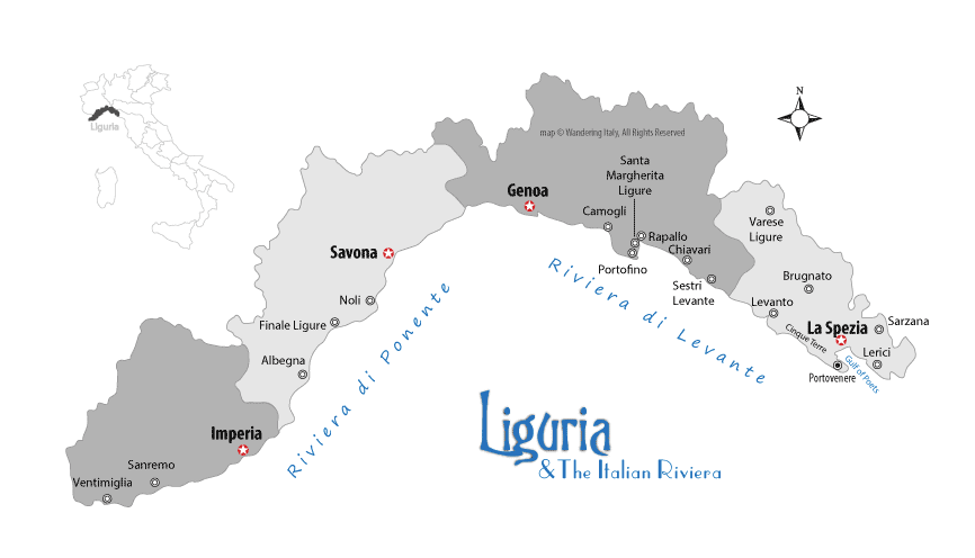
Only one great-grandma on this side of the family (Manuela Gonzalez) has unknown ancestry. Everybody else comes from the Liguria/Genoa area. In addition, they were part of the very early waves of Italian immigrants to Argentina (~ 1850-1860, exact dates unknown), before the Argentina immigration Law 817 was passed in 1876 which resulted in a huge influx of immigrants from Italy and other European immigrants.
Before Italy’s unification in 1861, the peninsula was divided into multiple states (e.g., Kingdom of Sardinia, Kingdom of the Two Sicilies, Papal States). So early immigrants were technically from “Genoa,” “Naples,” “Tuscany,” etc., not “Italy.”
Italian immigration to Argentina before 1870 was relatively modest but laid the groundwork for the massive waves that followed. Census data from 1869 already shows tens of thousands of Italians. Mostly came from Liguria (Genoa) and northern Italy, which is consistent with my immigrant relatives.
Italians left genoa and the Liguria area because of economic decline in maritime trades, decline of shipbuilding and shipping jobs, urban poverty, lack of land in Ligurian hills. Genoa had strong shipping ties with Buenos Aires, encouraging Ligurian merchants to relocate. Ligurians were among the first Italian groups to settle in Argentina, arrived even before the major waves from southern Italy. Mostly worked in artisan trades or small-scale commerce.
Maternal Side
We know little about my mom’s paternal side. My great-grandparents were Heraclio Ocampo and Juana Peralta. They were wealthy and owned a large ranch (“Estancia”) near Rawson, about 93 km from Mercedes. This is consistent with the “Ocampo” last name. The Ocampos belonged to Argentina’s landowning elite (the “oligarquía terrateniente”) in the 19th and early 20th centuries. The Ocampo family was historically part of the Galician nobility in Spain (this may explain the Spanish component of my ancestry.) Spanish immigration to Argentina, especially from Galicia, brought the surname over during both the colonial and post-independence periods. The Ocampo family name has been recognized as belonging to the Spanish aristocracy, especially in Argentina. The Ocampos were associated with the high society in early 20th-century Buenos Aires. especially notable for its cultural and literary influence, particularly through the prominent aristocratic and intellectual Ocampo lineage in Buenos Aires. (some famous Ocampos in Argentina are Victoria Ocampo and Silvina Ocampo).
My great-grandparents had only one son, my maternal grandpa Heraclio Caraciolo Vencedor Ocampo, who was born on June 4, 1910. He became an orphan when he was 14 years old (his parents were very old). He then moved to Mercedes and a tutor administered his substantial assets. He became addicted to gambling and lost all his fortune. I never met my maternal grandpa. My grandparents separated (divorce was not legal in Argentina) when my mom was very young (8 years old), and she had no contact with him. He moved near Buenos Aires (Quilmes), formed another family, and died on December 6, 1967 at 57 years old from bladder cancer.
On my mom’s maternal side, my great-great-grandparents Pascual Batemarco and Lucia Cussatti immigrated from Italy (Calabria, the “toe” of Italy’s boot) to Argentina (Buenos Aires) and had her only child my great-grandma Maria Batemarco in 1878. She had diabetes and hernia and died in 1950 at 72 years old of a heart attack. She married young with an older man (last name Dilernio), but had no children with him.
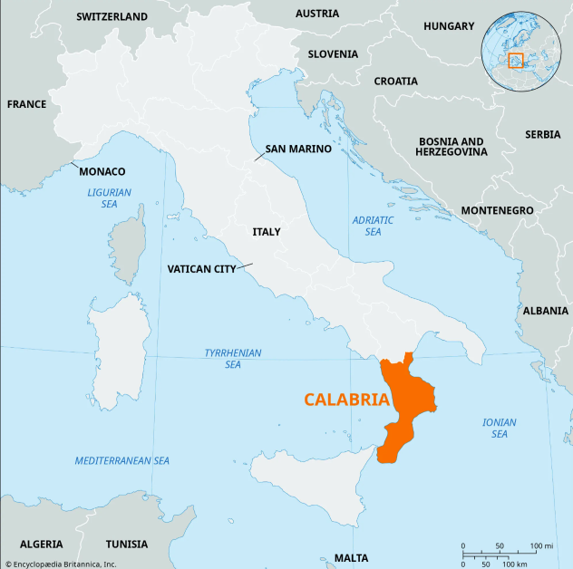
Emigration from Calabria, in southern Italy, was one of the most significant sources of Italian migration to Argentina (and the Americas) in the late 1800s and early 1900s. The reasons were extreme poverty. Calabria was one of the poorest regions in Italy after unification (1861). Most families were small-scale farmers or laborers with little or no land. Famines, droughts, and natural disasters (earthquakes, floods) added pressure to leave. There was overpopulation and land shortage, high unemployment (especially for young men), harsh rule and inequality, social mobility was extremely limited. Once a few Calabrians settled in Argentina, they encouraged and financed family and neighbors to join them. Between 1870 and 1920, hundreds of thousands of Calabrians arrived to Argentina. Most worked in agriculture, construction, street vending, or small trades. Departed through Naples or Palermo ports (there’s no major port in Calabria itself). Maintained strong Catholic traditions
My other great-great-grandparent on my mom’s maternal side was Sabino Barracchia, born in Trani, near the top of the “heel” of Italy’s boot. Before 2004, Trani was part of the Province of Bari, but in 2009 the new Province of Barletta-Andria-Trani was established, and Trani was included in that newly named administrative unit. Sabino was married with two children. His wife’s brother was Dilernio, the one who was married with Maria Batemarco in Argentina. Sabino traveled to Argentina and visited his brother-in-law, who was murdered in a confusing street altercation. Sabino fell in love with Maria Batemarco, left his family behind in Italy, and lived together with Maria. They never married, had several children, and he never recognized them. This is why they carried the last name “Batemarco”, and they were traumatized and ashamed of the circumstances. Sabino died on July 3, 1929 at 57 years old (lower lip cancer). One of the children was my maternal grandma Lucia Batermarco, born September 5, 1910.
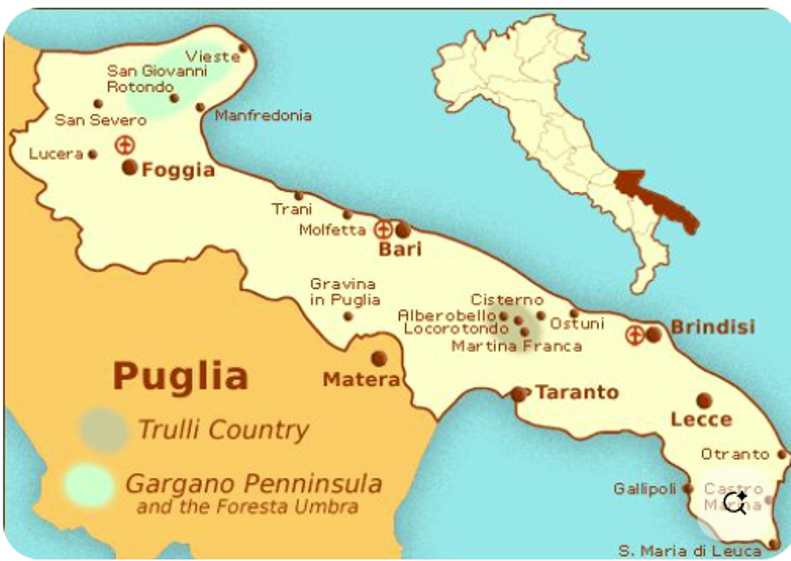
People from Trani and Puglia like Sabino emigrated because of economic hardship: Small farmers and laborers had little chance to improve their living standards. Sharecropping and tenant farming offered minimal income. Argentina offered free or cheap land and demand for labor, especially in agriculture and infrastructure. Letters from family and friends abroad encouraged others to emigrate.
My maternal grandparents Heraclio Vencecor Ocampo and Lucia Batemarco married in Mercedes on April 27, 1933, and went to live to his ranch in Rawson, but soon after came back to Mercedes. A very unstable time due to Heraclio constantly changing houses, jobs, and gambling, periods of separation and living back together. They had 3 children, the oldest my mom Maria Susana Ocampo born on February 3, 1935. My grandparents finally separated for good on April 10, 1943 when my mom was 8 years old.
In summary, my maternal side has a mix of Spanish and Italian descents. Compared to my paternal Italian side, who came from the north of Italy (Liguria/Genoa) and in an early immigration wave (1850-1860), the Italian immigrants from my maternal side came from the south of Italy (Calabria, Puglia) in a later wave of Italian immigration, around mid-1870s or later (exact dates unknown). This is consistent with Italians from the South coming in later waves, and after the 1876 Law of Immigration passed in Argentina.
Ancestry details and immigration dates from my maternal side Spanish immigration are missing. Only the last name (Ocampo), large land ownership, and aristocratic background give clues of the Spanish ancestry (The Ocampo family name has been recognized as belonging to the Spanish aristocracy, especially in Argentina). Unfortunately, my grandpa lost all his fortune, and my mom never enjoyed that privileged lifestyle. Spanish immigration may date much earlier than Italian immigration (as early as 16th or 17th century), because Argentina was a colony of Spain. This earlier immigration may also explain some of the Indigenous American components in my DNA because of the possibly many generations involved.